


Confession: I once left my first cadaver lab on a Sunday, both inspired and paralyzed. Could I take what I’d learned and actually put scalpel to skin on a real patient the next day? Turns out, I wasn’t alone. It’s one thing to watch a crisp demo or ace a weekend course; it’s another to carry that certainty back to your own operating room, heart pounding with each incision. That fear—equal parts imposter syndrome and fierce ambition—is precisely what the right kind of surgical training aims to address. In this post, I’ll walk you through the nuts, bolts, and curveballs of a program designed to make “minimal” incisions mean maximum impact.
When a Weekend Lab Isn’t Enough: The Reality Check
Let’s be honest—if you’ve ever walked out of a weekend cadaver lab on Minimally Invasive Surgery (MIS) for foot and ankle procedures feeling both excited and uneasy, you’re not alone. I remember the first time I left one of those labs, my mind buzzing with new techniques, but a nagging question followed me home: Could I really go back Monday and do this on a live patient? The answer, for most of us, is complicated. The gap between cadaver lab training and real-world surgery is wider than most courses admit.
The Monday Morning Dread: From Lab to Live Patient
Many surgeons, myself included, experience what I call the “Monday Morning Dread.” It’s that moment when you’re back in your clinic, staring at your schedule, and you realize that the patient in front of you isn’t a cadaver. There’s no pause button, no instructor at your elbow, and the stakes are infinitely higher. This anxiety is common, and it’s not a reflection of your skill or dedication—it’s a reality of how traditional medical education is structured.
What Typical Training Leaves Out
Most weekend courses and cadaver labs are fantastic for exposure, but they often leave out three critical elements:
- Real-case submission: Practicing on models or cadavers is not the same as submitting your own cases for review and feedback. Real-case submission is essential for building true proficiency in foot and ankle surgery.
- Peer mentorship: The value of surgeon mentorship can’t be overstated. Having access to experienced mentors who can guide you through complications and decision-making in Minimally Invasive Surgery is what transforms knowledge into confidence.
- Hands-on repetition: One weekend of practice isn’t enough. Mastery comes from repeated, supervised practice—something most traditional courses simply don’t provide.
Personal Stories: The Unfiltered Truth
I’ve spoken with countless surgeons who, after attending traditional cadaver lab training, felt unprepared to translate those skills to the operating room. One colleague told me, “I knew the steps in theory, but when it came to my first real patient, I froze. I needed more than a checklist—I needed support and real feedback.” These stories are not rare. They highlight the missing links in most surgical education: ongoing mentorship, real-case experience, and the chance to learn from mistakes in a supportive environment.
That’s exactly why we created the MIS intensive program. So, let me be clear. This is not just another weekend course…
The MIS Intensive Program was designed to fill these gaps. It’s not a board certification, and it’s not governed by any formal medical body. Instead, it’s a rigorous, practical skill-building experience built on surgeon mentorship, peer-reviewed education, and repeated hands-on practice. The goal is simple: to bridge the gap between the excitement of a weekend lab and the confidence required for real-world Minimally Invasive Foot and Ankle Surgery.
The Three Levels: Milestones, Coats, and Curveballs
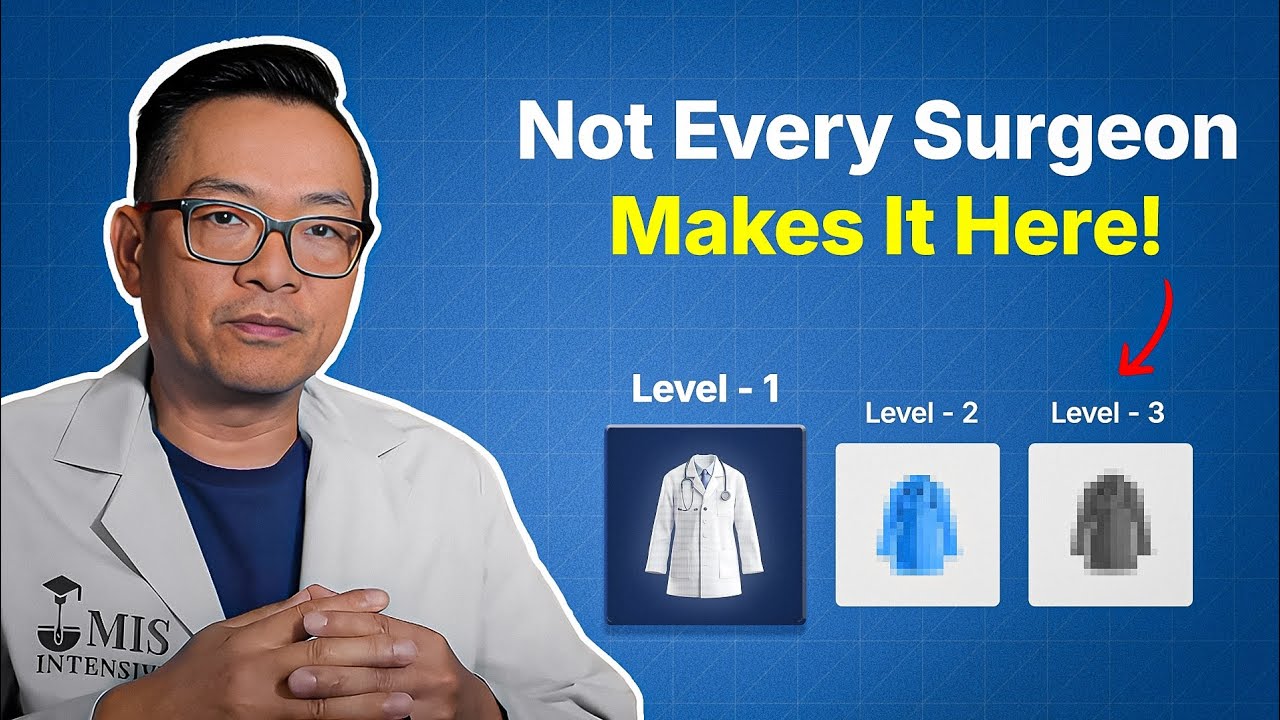
When I first entered the world of Minimally Invasive Foot and Ankle Surgery, I quickly realized that true surgical proficiency doesn’t come from theory alone. The MIS Intensive program is built around three progressive levels—each one marked by real achievements, not just attendance. These levels are more than steps; they’re milestones, each with its own colored coat and a sense of accomplishment that goes far beyond a certificate. As one of our mentors says,
“It’s not a participation award. This is a milestone that means something and you’ll be proud to display it.”
Level One: Fundamentals and the White Coat
Level One is all about mastering the essentials. Here, you focus on foundational Minimally Invasive Surgical Techniques—procedures like hammertoe correction, lesser metatarsal osteotomies, and key soft tissue skills. These are the bread-and-butter cases you’ll see every week in practice, and they form the backbone of surgical competency. The process isn’t just about showing up; it’s about proving yourself through hands-on work and peer review.
- Complete the MEAS Accelerator online course
- Attend three private cadaver labs, or two private plus one advanced lab
- Submit five planned and five completed cases
- Pass a cadaver practical exam (hammertoe and lesser metatarsal)
Success stories speak volumes: Dr. Martha Hosworth joined in December 2024 and passed in just 7 months. Dr. Alex Kim completed Level One in only 6 months. Others—like Dr. Dora Akil, Dr. Karen Lee, and Dr. Julia Aboud—finished in 6 to 8 months, all by following the system, submitting cases, and passing their practicals. With the white MIS coat and certificate, you earn more than a title; you gain confidence to perform these procedures independently.
Level Two: Advanced Skills and the Blue Coat
Level Two is where you step up to advanced Minimally Invasive Foot and Ankle Surgery, including Bunion Surgery and first ray procedures. Here, you’re not just following; you’re leading, selecting your own cases and refining your approach. The requirements are rigorous:
- Attend two private cadaver labs and one advanced lab
- Submit five planned and five completed bunion or first ray cases
- Pass a cadaver practical exam on a bunion procedure of your choice
Doctors like Dr. Anna Cupriva and Dr. Ashim Wadada have completed this level and are now confidently performing advanced procedures with excellent outcomes. The blue coat is a symbol of your leadership in Minimally Invasive Surgical Techniques and your readiness to tackle complex cases.
Level Three: Leadership, Teaching, and the Gray Coat
Level Three is about giving back—teaching, mentoring, and shaping the next generation of surgeons. Earning the gray coat means you’re not just skilled; you’re a leader on the global stage, contributing to the MIS community and advancing the field. This level is about genuine community contribution, mentorship, and sharing your expertise in Minimally Invasive Hammer Toe Correction, Bunion Surgery, and beyond.
Each level is a blend of hands-on practicals, peer review, and meaningful rituals. The colored coats are more than symbols—they’re proof of your journey from doubt to doing, and of milestones that truly matter in the world of Minimally Invasive Foot and Ankle Surgery.
More Than Certification: Belonging, Networks, and Geeky Perks
When I first considered the MIS Intensive Program, I thought the end goal was a certificate—a piece of paper to hang on my wall. But what I discovered is that the real value comes after the certificate, in the community and ongoing support that transforms surgical education into a lifelong journey. The program is designed to give us more than just credentials; it opens the door to a network, mentorship, and perks that keep us growing long after the final exam.
After completing the program, I gained one-year full access to the MIS Masterclass Vault—an ever-expanding library of surgical videos, case studies, and expert lectures. This resource isn’t just a static archive; it’s a living, breathing hub for continuous learning. Every week, I join live Zoom calls for case reviews and surgeon mentorship. These sessions aren’t just lectures—they’re interactive, real-time opportunities to discuss tricky cases, ask questions, and learn directly from experienced MIS faculty.
One of the most powerful features is the MEIFAS Elite Private Membership Community. Here, I’m not just another name on a list. I’m part of a group of peers who are all invested in each other’s growth. We share wins, troubleshoot complications, and celebrate breakthroughs together. The digital badge I received is more than a virtual trophy—it’s a sign of commitment and expertise that’s recognized within the community. And yes, the white, blue, or gray MIS coat awarded at the cadaver lab is a geeky perk that I wear with pride.
But perhaps the most game-changing benefit is entry into the PROMIS Surgeon Finder Directory. This isn’t just a pay-to-list directory. As the program states,
“Only level two and level three program graduates will be eligible. Now, this is not just a pay-to-list directory, but also it’s a vetted community of doctors who’ve done the work and earned the recognition.”
The directory is actively promoted to patients, making it a true referral network—one that validates your skills and connects you with people who need your expertise. It’s a curated, peer-approved list that sets you apart in a crowded field.
Imagine this: you’ve just finished the program, and you’re facing a challenging case. Instead of feeling isolated, you reach out to your new network. Within hours, you’re on a live call, discussing the case with mentors and peers who’ve been there before. That anxiety flips into an ‘aha!’ moment, and you walk into surgery with confidence. This is the real power of ongoing support and community.
In the end, the MIS Intensive Program is about more than checking a box or earning a certificate. It’s about joining a movement—a network of surgeons committed to mastery, visibility, and patient trust. With access to the MIS Masterclass Vault, live mentorship, and the PROMIS Surgeon Finder Directory, the journey from doubt to doing becomes a shared adventure, and every step forward is celebrated together.
TL;DR: The MIS Intensive Program isn’t your average certificate course; it’s a battle-tested, level-based pathway that transforms doubt into surgical skill through peer review, hard-earned benchmarks, and mentorship—all aimed at real-world, minimally invasive mastery.