


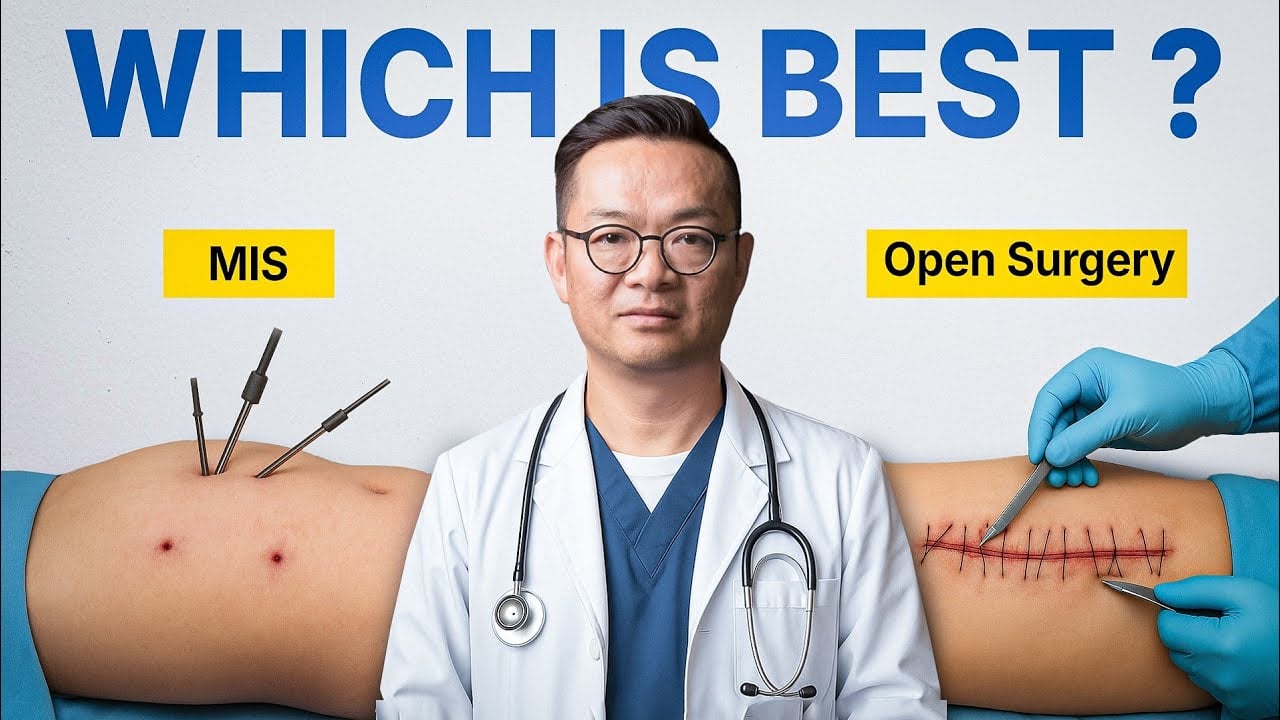
Let me take you back to my first minimally invasive foot surgery lab: I was nervous (yes, even after 1000+ cases) because there’s nothing like holding a scalpel and knowing you might be rewriting a patient’s story. You’ve probably stumbled across the term ‘minimally invasive’ on every orthopedic site, but how much of it is salesmanship and how much is substance? With a shelf full of drill bits, a tangled foot pedal cord, and a collection of odd instrumentation, here’s what actually matters when you peel back the curtain.
Section 1: What’s Legit (and What’s Just Shiny)? Debunking MIS Myths
Let’s get right to the heart of it: Is Minimally Invasive Foot Surgery (MIS) legit, or is it just the latest shiny trend? I’ve been asked this countless times—by patients, colleagues, and even skeptical family members. Here’s the real scoop, straight from the trenches of over 1,500 MIS cases and 40+ cadaver labs I’ve led.
MIS: No Longer Fringe—It’s Recognized and Approved
First, let’s clear the air: MIS isn’t fringe anymore. The 2024 AO FAS (American Orthopaedic Foot & Ankle Society) position statement puts it plainly:
“For mild to moderate hallux valgus, MIS is recognized when indication and technique are sound.”
This isn’t just a logo or a marketing buzzword. Minimally Invasive Foot Surgery is now a recognized discipline, with clear guidelines and professional backing—especially for bunion surgery and select deformities.
MIS vs Open Surgery Outcomes: What the Evidence Says
So, do patients actually do as well with MIS as with open procedures? The answer, according to several high-powered studies, is a resounding yes—when the technique is right and the patient is well-chosen:
- 2022 Frontiers in Surgery meta-analysis: Favored MIS for both radiographic and clinical outcomes.
- 2023 meta-analysis: More conservative, but still found comparable results.
- 2024 living systematic review: Newer-generation MIS techniques can be superior for certain measures.
The bottom line: With disciplined technique and careful patient selection, MIS vs open surgery outcomes are at least comparable, and sometimes better.
Internal Hardware Fixation: Not Always Required
One of the most persistent myths is that every MIS case needs screws or plates. That’s simply not true. Classic techniques—like Reverdin bunion correction and DMMO (Distal Minimally Invasive Metatarsal Osteotomies)—often succeed without any internal hardware fixation. Stability comes from the geometry of the osteotomy and disciplined bandaging, not just metal. For lesser metatarsals, DMMO is designed as a no-fixation approach, with functional bandaging guiding the healing. I’ll use hardware if a case truly demands it, but many don’t need it at all.
Classic Techniques Still Shine
It’s easy to get dazzled by the latest device or tool, but the truth is, discipline, evidence, and tactile skill are what really matter. The classic no-fixation pathways—like Reverdin and DMMO—are still relevant and successful, especially when performed by a surgeon with the right training and experience. My own lineage traces back to Dr. Steven Aisham, and I’ve seen firsthand how these approaches thrive when applied with care and precision.
In summary, Minimally Invasive Foot Surgery is not just shiny—it’s legit, evidence-based, and here to stay. But the real magic isn’t in the tools; it’s in the hands, the mind, and the discipline of the surgeon.
Section 2: The Not-So-Secret Sauce—Training, Tools, and Tactile Mastery
Let’s get real: when it comes to Minimally Invasive Surgery for foot and ankle, no amount of shiny gear or branded drill sets will make up for genuine training and experience. My most valuable lessons didn’t come from a catalog or a sales rep—they came from the quiet repetition of hands-on practice, especially in the cadaver lab. If you want this to stick as your skill set, you need real reps with your own hands-on experience, the right sequence, and actual feedback from proper mentorship.
Cadaver Labs: The True Classroom
Forget crowded, rushed workshops. The best learning happens with one surgeon, one foot, and no distractions. Over the past eight years, I’ve run 38 private cadaver labs and hosted eight international MIS conferences. Each lab is capped at 12 surgeons, with one cadaver per participant and up to 10 CE hours. This setup is crucial for developing advanced foot and ankle expertise—it’s where tactile mastery is built, not just talked about.
- Private, focused labs (not assembly lines)
- Direct, honest feedback from experienced mentors
- Real-world repetition—no shortcuts
Specialized Instruments: Keep It Simple
Don’t fall for the myth that you need every tool on the market. For most minimally invasive surgery procedures, I rely on:
- Bieber blade handle (for MIS blades like 62, 64, 67)
- Mini elevator (to create and release the portal)
- Mini rasp (to roughen cortical bone before bone cuts)
- Rotating bur and bone rasp (for osteotomies and bunion work)
- Affordable Korean or German drill sets (no need for top-shelf models at the start)
Honestly, I use just four main instruments for most cases. Don’t blow your budget until these become second nature in your hands.
Surgical Techniques: Control Over Speed
Technique matters more than tech. When cutting bone, always use the lowest speed possible with high-torque drills. Go too fast and you risk burning bone and soft tissue—trust me, I’ve made that mistake. Most surgeons I train never go above half-speed. It’s all about control, sensation, and protecting tissue, not specs or brand names.
Fluoroscopy: Use Only When Needed
Fluoroscopy (mini C-arm) isn’t always required. For soft tissue anatomy or capsulotomy, you’re fine without it. The moment you touch bone, though, it becomes essential for safety and precision. Know when to use it—and when to focus on your tactile skills instead.
Mentorship and Feedback: The Real Game-Changer
Watching videos or reading articles (I’ve collected over 200 for evidence-based practice) helps, but nothing replaces honest, hands-on critique. In the Dr. Steven Aisham tradition, tactile learning and real feedback matter most. That’s how you move from theory to mastery in minimally invasive foot and ankle surgery.
“If you want this to stick as your skill set, you need real reps with your own hands-on experience, the right sequence, and actual feedback from proper mentorship.”
Section 3: Where MIS Shines (and When to Be Cautious)
If you’re wondering how is minimally invasive foot surgery performed and where it truly excels, let me share what I’ve learned—both from the research and from being on the table myself. There are clear “sweet spots” where minimally invasive surgery (MIS) really shines, and a few places where caution is absolutely essential.
Let’s start with the winners. Hammer toe correction is one of the most reliable entry points for MIS. Recent comparative studies, like the 2024 JFAS paper, show that when the technique and aftercare are dialed in, percutaneous procedures hold up just as well as open surgery. Union rates, return to activity, and complication ranges are all comparable. The same goes for lesser metatarsal DMMO (Distal Minimally Invasive Metatarsal Osteotomy). With careful patient selection and the right protocols, outcomes are excellent—less tissue trauma, less pain, and a faster recovery time.
Another area where MIS can be a game-changer is for interdigital corns or persistent fifth toe pain. For the right patient, percutaneous bony work can offer real relief with a low complication rate, as long as the surgeon maintains strict discipline in contouring and technique. But it’s not for everyone—proper patient selection is key. If you’re not a good candidate, pushing ahead can lead to disappointment or complications.
A big question I get is about office-based surgery. Is it safe? The answer is yes—if, and only if, everything is protocol-driven. As the 2024 JAMMA study reported, the superficial infection rate for office-based MIS was about 2%, which is on par with or even safer than many outpatient settings. But this safety only holds when documentation, checklists, logs, and sterilization flows are all perfectly aligned. As one expert put it,
“It’s safe when protocol-driven—documentations, checklist, and logs and sterilization flow all aligned.”
Don’t cut corners here. You don’t want to be the subject of a surgical horror story.
Now, a word of caution. Beware the “MIS hijack”—hardware-first marketing gimmicks that promise minimally invasive results but skip the fundamentals. True MIS skill comes from hands-on experience, not from crowded cadaver labs where you barely get a feel for the instruments. If you want to master these techniques, you need real reps, honest feedback, and mentorship—not shortcuts.
In summary, complications management in MIS is all about precision and discipline. When performed correctly, you can expect solid union rates, low complications, and a rapid return to activity. But the key is strict adherence to protocols and honest patient selection. MIS isn’t magic—it’s a tool. Used wisely, it can transform recovery time and outcomes. Used carelessly, it’s just another risk. Choose your surgeon—and your procedure—wisely.
TL;DR: If you’re serious about mastering minimally invasive foot and ankle surgery, skip the marketing gloss—focus on evidence, hands-on reps, and learn the telltale signs of real progress (and the warning flags of shortcuts).