


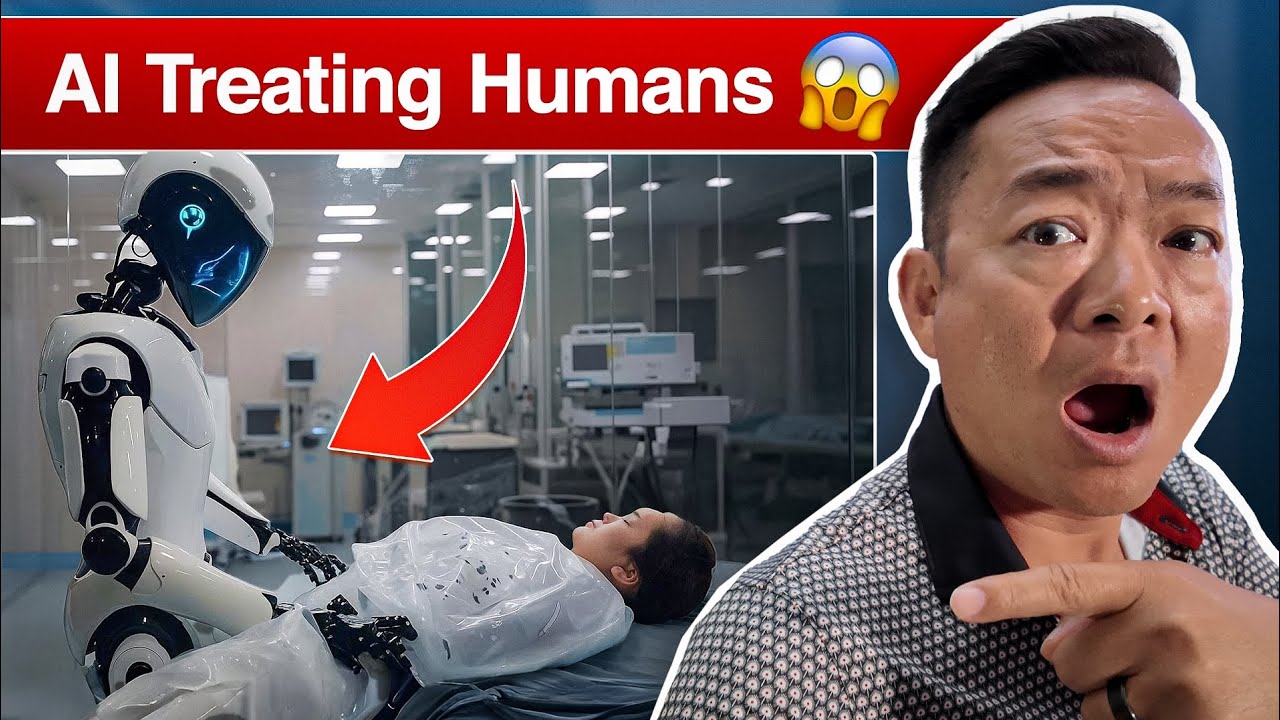
I’ll never forget the first time I heard an AI had predicted cancer before any doctor could see it. It sounded like science fiction. Fast-forward to 2025, and not only is this stuff real, it’s beaten us to the diagnosis in multiple fields. Today, I’m breaking down what’s amazing, what’s terrifying, and—because I’m honestly still processing it all—what makes me pause about our new AI ‘colleagues.’ Whether you’re a patient, a practitioner, or an eye-rolling skeptic, this is my no-hold-barred inside look at how AI is reshaping what it means to get (and give) a diagnosis.
AI with X-ray Vision: When Algorithms See What We Can’t
Watching MIT’s Jamil Clinic demo of Sybil—their deep learning AI for lung cancer prediction—felt like peering into the future of medicine. This isn’t just another AI diagnostic tool. Sybil analyzes your lung CT scan and predicts your risk of developing lung cancer up to six years before symptoms appear. That’s not an exaggeration; it’s a seismic shift in AI disease detection and AI in medical imaging.
What sets Sybil apart is its ability to bypass traditional risk factors like age or smoking history. Instead, it sifts through every pixel and layer of a CT scan, drawing on patterns learned from thousands of low-dose CT images. This means Sybil can spot subtle changes invisible to even the most experienced radiologists. As one expert put it,
“But Sibil was able to say something about this scan makes me worried. Especially this little area in that location. Correct.”
How Sybil Sees What Humans Miss
Traditional lung cancer screening relies heavily on what radiologists have defined as “relevant” over time—nodules, densities, and other visible markers. But Sybil doesn’t just look for what’s already known. It integrates all the data in a scan, including features that might seem insignificant to a human eye. This is where AI diagnostic tools truly shine: they aren’t limited by human bias or experience.
- Prediction Horizon: Sybil can forecast lung cancer risk for one, two, and even up to six years into the future, based solely on imaging data.
- Data-Driven: Trained on thousands of CT scans, Sybil’s “knowledge” comes from real patient outcomes, not just textbook cases.
- No Clinical History Needed: The model doesn’t require age, smoking status, or other traditional risk factors—just the scan itself.
Real-World Impact: A Case That Changed My Mind
One example from the MIT demo still gives me chills. A patient had a CT scan that looked normal to the radiologist. No red flags, nothing to suggest cancer. But Sybil flagged a tiny area as “worrisome.” Two years later, that exact spot developed into lung cancer. The radiologist admitted, “As a radiologist, I wouldn’t have pointed to this at all.” Yet Sybil saw what everyone else missed.
This isn’t just a cool tech trick. Diagnostic errors affect nearly 5% of the population each year, often with devastating consequences. AI lung cancer prediction models like Sybil offer a real chance to reduce these misses and improve diagnostic accuracy. It’s like having a crystal ball for your lungs—one that doesn’t get tired, distracted, or overlook the unexpected.
Sybil’s uncanny ability to flag cancer risk earlier than radiologists is both awe-inspiring and a little unsettling. When AI can “see” what we can’t, it forces us to rethink the limits of human expertise and the future of diagnostic accuracy improvement in medicine.
Democratizing Diagnosis: AI Eyeballs for Everyone?
When I first saw CyberSight’s AI in action, it felt like science fiction made real. Imagine a small camera, an internet connection, and suddenly, a community health worker in rural Vietnam—or anywhere—can screen for diabetic eye disease in seconds. No ophthalmologist needed on site. This is AI diabetic eye disease detection at its most powerful: accessible, fast, and designed for places where specialist care is scarce.
How AI Diagnostic Tools Are Changing the Game
CyberSight AI, developed and operated by Orbit, is a clear example of AI democratizing healthcare. The system uses artificial intelligence to analyze retinal images and flag signs of diabetic retinopathy and glaucoma. What’s remarkable is that it doesn’t require a doctor to operate. Nurses, technicians, or even community health workers can use it after minimal training. The process is quick—just a few seconds per patient.
- Simple setup: Just a retinal camera and internet connection.
- Rapid results: AI disease detection happens in seconds.
- Wider reach: Operates in low- and middle-income countries, expanding access to care.
Unlocking Specialist Diagnostics for Underserved Regions
Before this technology, many people in remote areas simply went without eye screenings. Local ophthalmologists were stretched thin, and traveling to a city for care was often impossible. Now, with AI diagnostic tools like CyberSight, more patients are getting screened, and local specialists can focus on the most urgent cases. It’s a real boost for healthcare outcomes in places that need it most.
Clinical Impact: More Patients, Better Outcomes
The numbers are striking. In a recent clinical trial, patients screened with CyberSight AI were 30% more likely to pursue recommended specialist visits compared to those who had to wait for traditional results. That’s a huge leap in follow-up care, and it means fewer people fall through the cracks.
‘Early diagnosis and treatment through screening can reduce the risk of vision loss by 98%.’
That quote isn’t just hopeful—it’s backed by data. Early, accessible detection of diabetic retinopathy and other eye diseases can reduce the risk of vision loss by 98%. This is diagnostic accuracy improvement in action, not just theory. It’s about catching problems early, when treatment is most effective, and making sure people actually get the care they need.
AI Healthcare Outcomes: Beyond the Hype
What excites me most is how AI is unlocking specialist diagnostics for underserved regions worldwide. With tools like CyberSight, we’re not just talking about futuristic tech—we’re seeing real-world impact. More patients are getting critical care, local ophthalmologists are freed up for complex cases, and preventable blindness is being pushed back, one quick scan at a time.
We have the technology. The challenge now is scaling up—getting these AI diagnostic tools into as many hands, and as many communities, as possible.
When AI’s the Consigliere, Not the Doctor: Cautious Collaboration and Big Claims
Walking through the Cleveland Clinic’s epilepsy center, I saw firsthand how AI is becoming a trusted consigliere—not the doctor, but a sharp second set of eyes. Dr. Irene Wong, research director at the center, showed me how AI in clinical workflows now scans through more than 400 MRI slices for each patient, highlighting suspicious regions that might trigger seizures. This is not about AI replacing human doctors, but about boosting AI diagnostic accuracy and catching what even the best-trained eyes might miss. The doctor remains the decision-maker, interpreting the AI’s suggestions and adding the empathy and context that only a human can provide.
The real-world results are impressive: at Cleveland Clinic, AI helps pinpoint tricky lesions in epilepsy cases, surfacing patterns across thousands of past cases. The technology’s ability to flag high-probability regions means fewer missed diagnoses and, potentially, better AI healthcare outcomes. But as Dr. Wong put it, “I think that’s an area that is yet to be decided”—especially when it comes to who’s responsible if the AI is wrong. The ethical considerations are real: if an algorithm makes a mistake, is it the doctor’s fault, the hospital’s, or the software developer’s? Our policies haven’t caught up with the pace of AI’s evolution.
Then there’s the other end of the spectrum—Microsoft’s new AI diagnostic platform, MAI-DxO, which claims to diagnose patients “four times more accurately than doctors and at a fraction of the cost.” In controlled test scenarios, it’s reached over 85% accuracy, sometimes outperforming human clinicians by a wide margin. The company even hints at “medical superintelligence.” But as exciting as these AI vs human doctors headlines sound, most experts (and I agree) urge caution. These systems need rigorous validation in the messy, unpredictable world of real patients. As one Wired reporter pointed out, AI can optimize for cost and accuracy, but it doesn’t know if a patient is terrified of needles, or if a certain test isn’t available at a local clinic. That’s where human judgment and compassion still matter.
By 2025, over 90% of hospitals are expected to use some form of AI-powered diagnostic tech. The data is promising: AI can reduce hospital admissions by up to 50% and improve survival predictions by 80% in some studies. But AI diagnostic reasoning is only as good as the data it’s trained on—and it can’t understand the nuances of a patient’s life, fears, or hopes. AI isn’t magic. It’s a tool that sharpens our vision, not a replacement for human care.
So, will AI replace your doctor? My answer—and my hope—is no. But can it help your doctor spot problems earlier and improve your care? Absolutely. That’s the promise we should embrace: cautious collaboration, not blind trust. In the end, healing is still shaped by human connection, with AI as a powerful partner, not a substitute.
TL;DR: AI is rapidly transforming patient diagnosis in 2025, offering superhuman pattern-spotting, speed, and a new kind of collaboration with doctors. But while the promise is staggering, real-world adoption brings both new hope and serious ethical headaches. My take? Celebrate the progress, scrutinize the hype, and never forget the irreplaceable role of human judgment.