


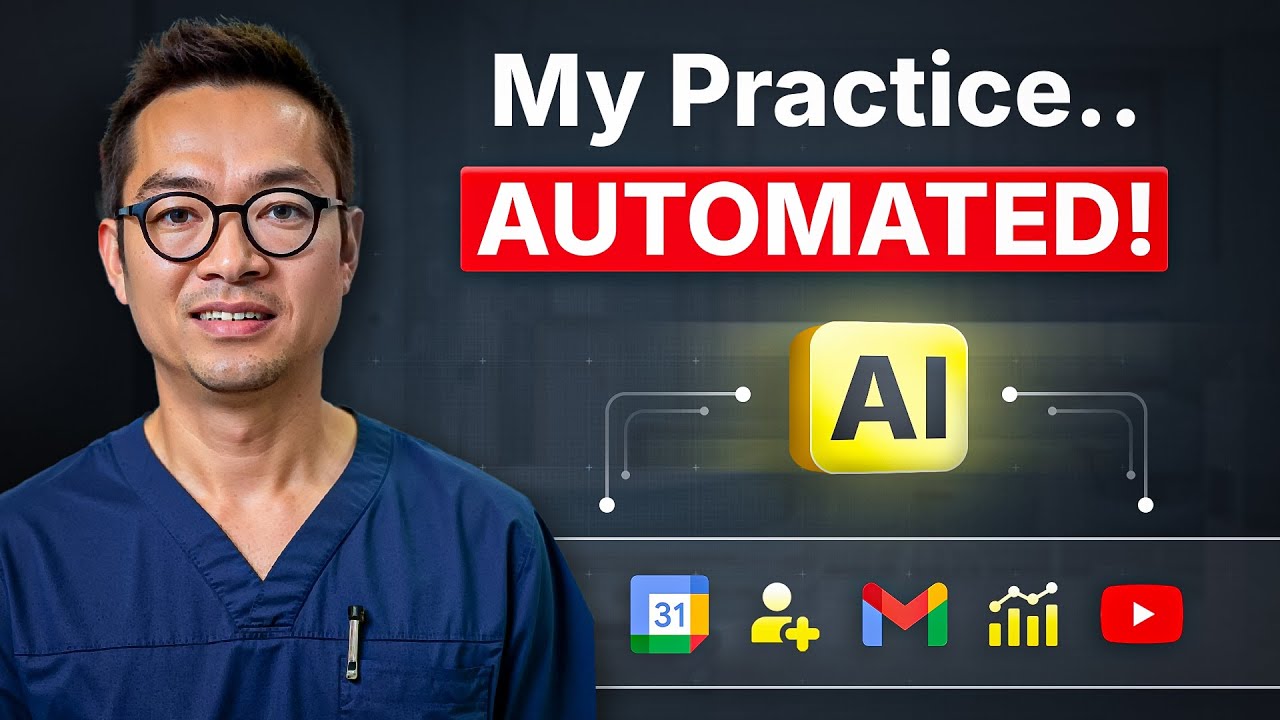
Let me set the scene: Two years ago, every Sunday night was a paperwork marathon. My dining table would disappear beneath mountains of half-written policies, patient emails, and spreadsheets so complicated they might as well have been in ancient Greek. Honestly, I started to question if running a private practice was about healing people… or about battling admin tasks until midnight. But here’s the plot twist: I clawed back more than 12 hours a week using plain old AI. (Spoiler: My tech “aha” moment had nothing to do with becoming a Silicon Valley hacker.)
Section 1: How a Robot Secretary Saved My Sanity (Administrative Automation in Action)
If you’re drowning in endless paperwork, emails, and missed calls, I get it—I was there too. The administrative grind in private practice used to eat up my evenings, leaving me exhausted and frustrated. But everything changed when I embraced AI automation for medical administration. Suddenly, I wasn’t just surviving—I was outsmarting the chaos.
ChatGPT and Google Gemini: My Secret Weapons
Let’s talk about the real game-changers: ChatGPT and Google Gemini. These AI tools for doctors aren’t just buzzwords—they’re the backbone of my new workflow. Need a new policy, patient email, or even a marketing draft? What used to take hours now takes minutes—or less.
For example, last week I needed a new no-show policy. The old way: 45 minutes of writing, editing, and second-guessing. Now? I typed, “Create a professional but empathetic no-show policy for a private medical practice. Keep it under 200 words and include a rebooking process.” Fifteen seconds later, ChatGPT delivered a polished draft. I tweaked two sentences and sent it to my team. Total time: three minutes. That’s ChatGPT medical document creation in action.
AI Phone Systems: Never Miss a Patient Again
Another silent killer of efficiency? Missed calls. Before AI, my practice averaged 150+ missed calls a month. Now, our AI-powered phone system fields calls 24/7, books appointments, screens inquiries, and escalates complex cases to staff when needed. My team can finally focus on meaningful patient interactions instead of playing phone tag all day.
Real-Life Time-Warps: 3 Hours to 3 Minutes
Whether it’s automating SOPs, post-op instructions, or patient handouts, improving practice efficiency with AI is real. What once took me 30 minutes to three hours now takes 30 seconds to three minutes. That’s not an exaggeration—it’s my daily reality.
“You wouldn’t do your own medical billing by hand when software can do it faster and more accurately, right? AI is the exact same principle.”
Here’s the truth: being a doctor shouldn’t mean being a super-powered office admin. AI patient communication tools and document automation let me focus on doctoring, not drowning in busywork. And I’m not alone—physician enthusiasm for AI is skyrocketing, with admin automation now a top investment priority in medical practices nationwide.
Section 2: The Gut Instinct Trap—How AI Let Me SEE My Practice’s Hidden Data (And What it Meant for My Bottom Line)
For years, I fell into the classic “gut instinct” trap. Like most private practice owners, I was sitting on mountains of data—revenue per service, patient volume, conversion rates, and no-show patterns. But the truth? I was too busy to dig into it. My decisions were based on what felt right, not what the numbers actually said. Sound familiar?
Here’s where data analysis in medical practice gets real. Last quarter, I wanted to know which services were truly profitable—not just in gross revenue, but in profit per hour of my time. My spreadsheets had the answers, but I didn’t have three hours (or a data science degree) to crunch the numbers. So I uploaded my revenue data to ChatGPT and asked: “Which service has the highest profit margin per hour of provider time?”
Thirty seconds later, AI revealed a shocker: my pain management consults were generating three times more profit per hour than I thought. These appointments looked small compared to procedures, so they’d been lost in the noise. That single insight changed my entire Q3 strategy. I rebuilt my schedule to fit in more consults, trained my staff to prioritize them—and my revenue jumped 22% without working a single extra hour. That’s the power of boosting practice profits with AI.
Most doctors are still guessing, while the future-focused ones are automating smart analysis. In fact, over 66% of physicians are now using AI to glean business insights from everyday data. The AI healthcare market size is expected to reach $67.4 billion by 2025, with a 37% CAGR—proof that data-driven decision-making is fueling the next leap in clinical efficiency.
- AI can instantly spot your best appointment times, patient drop-off sources, and real drivers of no-shows.
- You don’t need fancy dashboards or expensive software—just know how to ask the right questions.
“This is the difference between guessing and knowing.”
Are you tracking your key performance indicators—like revenue per patient or profit margins by service? If not, what’s stopping you? AI isn’t magic—it’s leverage for improving practice efficiency and unlocking hidden profits.
Section 3: Content Machines and the Heroic Act of Not Becoming a Full-Time Influencer (AI in Marketing and Patient Engagement)
Confession time: If I had to spend my weekends filming Instagram videos and writing endless blog posts, I’d probably quit medicine. The reality is, in 2025, if you’re not creating content, you’re invisible. But between patient care and running a practice, who has time to be a full-time influencer? That’s where AI-driven marketing strategies for medical practices have changed everything for me.
Here’s the brutal truth: You need to be visible online, but you don’t need to live online. AI tools for doctors now act as content creation automation engines. I use AI to turn a single video into a dozen different assets—emails, blog posts, social captions, even patient education flyers. The best part? I’ve trained the AI to write in my own voice. No robotic, generic copy—just clear, helpful communication that sounds like me. My patients can’t tell the difference, and they appreciate the consistent, relevant updates.
Let me walk you through my “content machine” approach:
- Step 1: Record one video (for YouTube, for example).
- Step 2: Use AI to transcribe, summarize, and reformat that video into:
- Short-form clips for Instagram and TikTok
- SEO-optimized blog posts
- Email newsletters and sequences
- Social media captions
- Patient education materials
- Step 3: Schedule and publish everywhere—automatically.
This is more than just content—it’s AI-driven patient engagement. Tools like automated follow-up messages and personalized outreach help me stay present for patients, even when my schedule is packed. In fact, 66% of physicians now use AI to create or repurpose content, and it’s a gamechanger for private practices.
“AI lets you create content once and multiply it everywhere.”
But here’s what matters most: AI isn’t about replacing real relationships. It’s about freeing up time so I can focus on what counts—connecting with patients. AI patient communication tools help me build trust and loyalty, not just push out noise. That’s the real-life cheat code for modern medical marketing.
Conclusion: Smarter Not Harder—How AI Redefined What My Practice (And My Life) Could Be
If you’re reading this and thinking, “I’m not a coder, and I barely have time to learn new tech,” let me assure you: you don’t have to be a tech wizard to unlock the life-changing benefits of AI in healthcare. The biggest leap isn’t technological—it’s a shift in mindset. AI isn’t a sci-fi future; it’s the new normal for smart, modern practices. Early adopters are already seeing dramatic improvements in profit, patient satisfaction, and—maybe most importantly—personal well-being.
When I first started exploring AI automation in my own private practice, I was overwhelmed. But as I implemented simple, targeted AI solutions for private practice, everything changed. Suddenly, my evenings weren’t swallowed by admin tasks. I could make decisions based on real-time data, not guesswork. Marketing became a system, not a stressor. I stopped letting my practice own me—and started letting AI work for me. That’s how I got my Saturdays back.
Industry data backs this up: by 2025, up to 90% of hospitals and practices are expected to use AI for admin, efficiency, and patient care. The US healthcare system is projected to save $20 billion annually just from AI-driven admin improvements. The message is clear: AI automation is now central to medical practice success. Don’t get left behind.
The real magic happens when you leverage AI not just for efficiency, but for impact. My hybrid concierge model is built on this principle: “This is how you build a seven plus figure lifestyle practice. Not by grinding harder, but by building smarter systems that multiply your leverage.” It’s about shifting from effort-based income to leverage-based impact—freeing you to focus on what matters most: your patients and your life.
Looking back, AI didn’t just transform my practice; it gave me freedom and growth I never thought possible. It’s not a threat—it’s a quirky, reliable partner in scaling human-centered care. So, if you’re ready to reclaim your time, rethink your systems, and rediscover the joy of doctoring, let AI be your digital sidekick. Build a smarter practice, not a harder one—and maybe, just maybe, get your weekends back.
TL;DR: You don’t need to be a tech prodigy to reap the rewards of AI in your medical practice—just the right approach. Automate wisely, analyze fearlessly, market creatively, and reclaim your nights (and maybe even some weekends).