


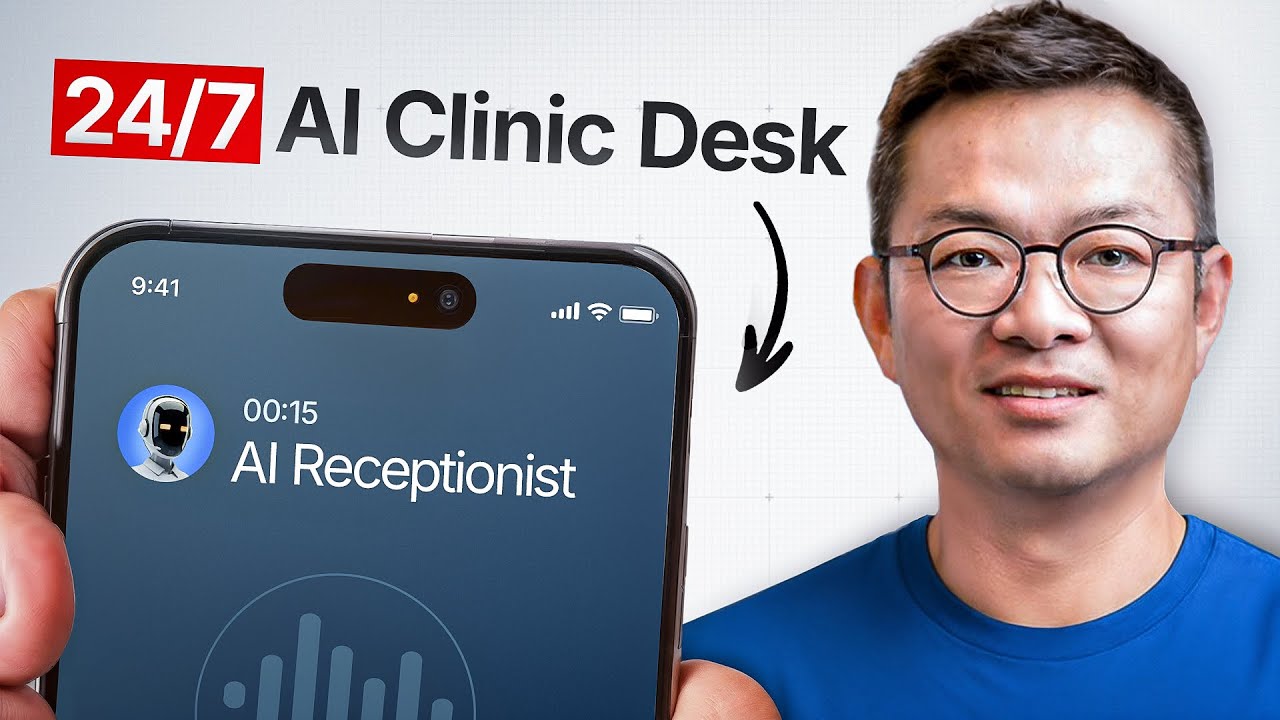
I’ll never forget the day I watched a patient storm out of our waiting room—frustrated after being on hold too long. That tiny moment made me realize our real competition wasn’t just the clinic down the street, but our own bottleneck at the front desk. If you’ve ever felt like your admin team is drowning while your phone line rings off the hook, you’re not alone. In today’s healthcare hustle, admin chaos isn’t a sign of a busy practice—it’s a sign something has to change. Let me show you how AI, not just as a buzzword, but as a tool that actually works in the trenches, can flip your admin nightmare on its head.
A Front Desk on Fire: The Real Cost of Administrative Overload
Let me paint you a picture from my own experience: I’ve watched front desk teams juggle ringing phones, endless forms, and a waiting room full of frustrated patients—sometimes all at once. It’s not just chaotic; it’s unsustainable. And if you’re still running your practice like it’s 2015, you’re already falling behind.
The Hidden Toll of Administrative Overload
Here’s the reality that most practices don’t want to admit: administrative overload is quietly bleeding your business dry. The numbers are staggering:
- 150 missed calls every month. That’s not a typo. Every missed call is a potential patient lost—often to the competitor down the street.
- 82% of healthcare staff are burned out from the relentless grind of admin work. That’s nearly everyone on your team feeling exhausted and disengaged.
- 34 hours per week—that’s how much time your staff spends on repetitive administrative tasks instead of helping patients.
These aren’t just statistics; they’re symptoms of a system in crisis. When your team is drowning in admin, patient care suffers, and so does your bottom line.
The Financial Bleed: Cost of Admin Bloat
Let’s talk dollars and sense. The average practice spends $80,000 to $130,000 per year just to keep up with administrative work. That’s money going straight into labor costs for tasks like:
- Answering the same questions—“What are your hours?” “Do you take my insurance?”
- Manually entering patient data
- Calling insurance companies and sitting on hold for 20-30 minutes at a time
- Chasing down no-shows and rescheduling appointments
And when burnout inevitably leads to turnover, the cost to replace just one front desk employee is a staggering $61,000. That’s not just a hit to your finances—it’s a blow to morale and continuity of care.
The Human Cost: Burnout and the Revolving Door
Staff burnout in healthcare isn’t just about feeling tired. It’s about losing your best people to exhaustion and frustration. When 82% of your team is burned out, you’re stuck in a costly cycle of hiring, training, and losing staff. Each departure means more lost knowledge, more disruption, and more money down the drain.
If you’re still running your practice like it’s 2015, you’re already falling behind.
AI Healthcare Administration: The Wild Card
Now, imagine if your front desk could answer every call, schedule appointments, and handle routine questions—even at midnight—without a single sigh of exhaustion. That’s the promise of AI healthcare administration. By reducing administrative burden and automating repetitive tasks, AI is already helping practices save $80,000 to $100,000 per year, while dramatically reducing healthcare staff burnout and improving patient loyalty. The smartest practices are already leveraging cost savings AI to transform their operations—and the gap is only getting wider.
Breaking the Bottleneck: Two-Tier AI Admin Stack (With a Personal Twist)
My “double-espresso” moment came when I realized that nearly every administrative task in a medical practice falls into one of two buckets: patient-facing or non-patient-facing. The smartest practices are now leveraging a purpose-built AI admin stack—and it’s transforming how healthcare teams work, save money, and keep patients happy.
Tier 1: HIPAA-Compliant AI for Patient-Facing Work
Let’s start with the front lines. HIPAA-compliant AI tools are no longer science fiction—they’re answering phones 24/7, booking appointments, handling insurance questions, and even following up with patients. These voice AI healthcare solutions and AI-driven chatbots are built specifically for anything that touches patient data. That means they’re secure, privacy-focused, and come with a business associate agreement (BAA) to keep you compliant and protected from massive HIPAA violations.
- Voice AI: Picks up every call, books appointments, answers FAQs, and never gets tired. Hospitals using voice AI have seen an 18% boost in patient satisfaction and a 25–30% drop in no-shows.
- AI-Driven Chatbots: Instantly engage website visitors. Cornell Medicine reported a 47% increase in digital bookings after deploying an AI chatbot.
- SMS Automation: With a 98% open rate, automated reminders drastically cut down on missed appointments.
- Digital Intake Forms: Save staff 5–7 hours per day on data entry, freeing up time for higher-value work.
One health system saved over $3.2 million annually by embracing this tier of AI healthcare administration. And the best part? These tools are specialty-agnostic—whether you’re in podiatry, dermatology, or primary care, “The AI adapts to your specialty, we train them.”
Real-World Example: Meet “Jenny” the Voice AI
Let me give you a personal example. At my clinic, we deployed a voice AI named Jenny. She doesn’t just book appointments—she confirms insurance, answers parking questions, and chats in real conversational English. Here’s how it works:
- Patient calls in with heel pain.
- Jenny greets them, collects their info, checks insurance, and sends a booking link—no human staff tied up.
- Jenny can answer follow-up questions (“Do you have parking?” “Is my insurance accepted?”) and even switch to Spanish on request.
It’s not just convenient; it’s a game-changer for patient experience and staff workload.
Tier 2: Consumer AI for Non-Patient-Facing Work
Now, for everything behind the scenes—think vendor research, supply ordering, CME course comparisons, and email drafting—consumer-grade AI tools like Perplexity’s Comet browser are invaluable. The golden rule: never put patient data into these tools. But for non-sensitive tasks, they’re fast, free, and effective.
- Research vendors or compare prices in seconds.
- Draft internal memos or emails with AI assistance.
- Automate inventory checks and ordering.
The framework is simple: Patient data? Tier 1, HIPAA-compliant AI. Everything else? Tier 2, consumer AI. This two-tier approach is the new standard for AI healthcare adoption—and it can be deployed in as little as two to three weeks, fully adapted to your specialty.
Crunching the Numbers: Real-World AI ROI (and a Glimpse at the Future)
Let’s get real about the numbers. When I first piloted an AI healthcare administration stack in a busy clinic, even our most skeptical practice owner was floored. We watched our admin costs plummet from well over six figures—about $130,000 a year for front desk labor—to just under $30,000 annually. That’s an $80,000–$100,000 savings, year after year. And this isn’t some distant promise; it’s happening in practices right now, across specialties.
Here’s how it works: The AI answers patient calls immediately, 24/7, with zero hold time. It understands natural conversation, sends real-time booking links, and even confirms appointments via text—all without a single minute of staff time. That means no more late-night voicemails, no more staff burnout from endless phone duty, and no more lost patients due to missed calls. This is the power of automating appointment scheduling with HIPAA-compliant Voice AI, chatbots, and smart intake tools.
The cost savings from AI in healthcare are substantial, and industry research backs this up. Projections show that AI-driven process improvements could save the U.S. healthcare system $200–$300 billion every year. More than 80% of health system executives expect generative AI to have a significant or moderate impact on their organizations by 2025. The ROI is not just about dollars; it’s about time, energy, and staff morale.
Practices using AI healthcare administration tools are seeing a 25–30% reduction in no-shows, a 47% increase in digital bookings, and an 18% boost in patient satisfaction. Staff are happier and less burned out, and patients love the convenience. As one practice manager told me, “The AI never sleeps, never gets frustrated, and never makes a patient wait.” That’s a game-changer for both cost savings and patient satisfaction with AI.
Here’s the wild card: By 2027, three out of four clinics are projected to use conversational AI. That means the window for early adoption is closing fast. As I always say, “The practices that implement AI admin automation now will dominate their markets in 2–3 years.” While some clinics are still manually answering phones and drowning in paperwork, others are scaling effortlessly, booking patients at 11:00 p.m. on a Saturday, and handling 100 calls a day with zero staff burnout. They’re saving $100,000 a year and building a reputation for unbeatable convenience.
The choice is clear. You can stick with the old way—high costs, burned-out staff, and lost patients—or you can embrace AI, automate appointment scheduling, and compete on convenience and efficiency. With 75% of providers expected to deploy conversational AI by 2027, the question is: Will you lead, or scramble to catch up?
The doctors who figure this out first are the ones who win.
I want you to be one of them. Build leverage, not labor. The smartest practices aren’t working harder—they’re working smarter, and AI is their secret weapon.
TL;DR: If your front desk is overwhelmed, you’re losing money and patients. The smartest medical practices are adopting HIPAA-compliant AI tools to automate scheduling, reduce staff burnout, and boost patient satisfaction—saving up to $100,000 a year. Don’t get left behind: leverage AI now, not later.