


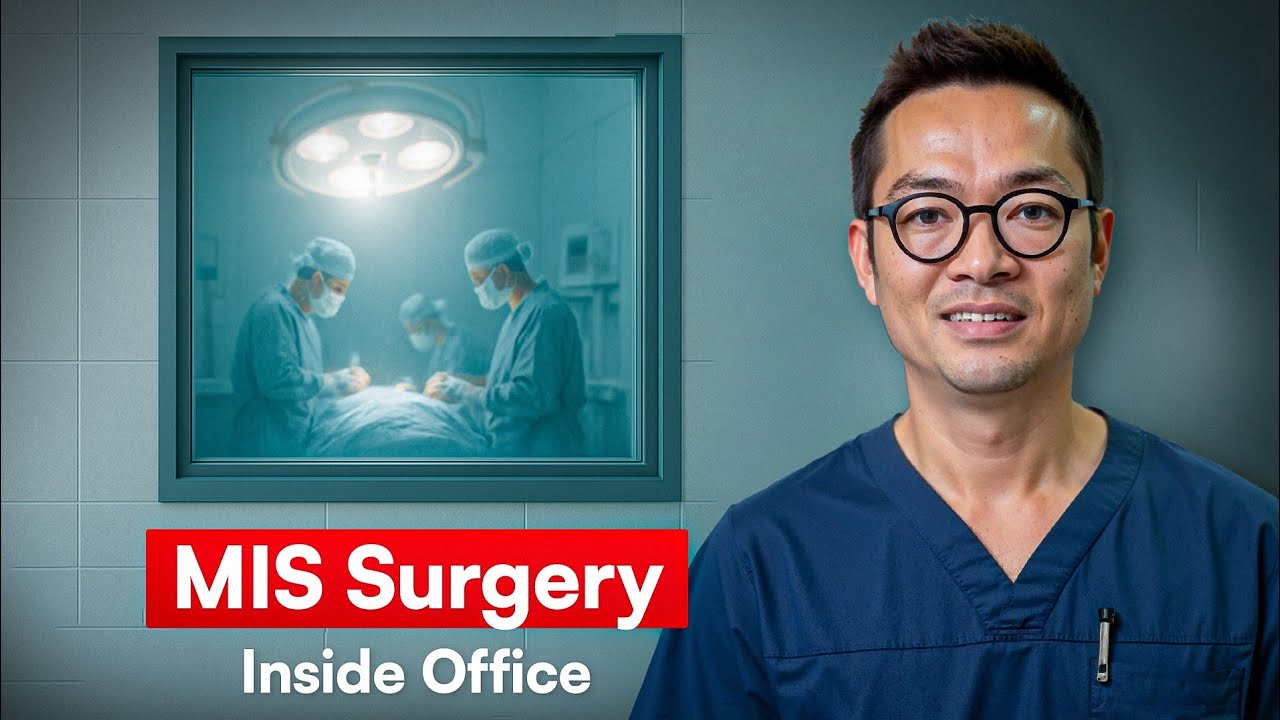
Picture this: It’s 5:45 a.m., and you’re haggling for precious OR time while eyeing your ever-growing pile of paperwork. Been there? What if I told you that the badge everyone’s secretly wishing for isn’t a fancy hospital title—it’s the key to your own office-based surgery suite? As someone who once thought all the good things in medicine were reserved for ‘other doctors,’ I stumbled on MIS like discovering a secret passage at a hospital I’d practically lived in for years. Let me share what changed the game for me—and why it might do the same for you.
Breaking Free: The Office-Based Surgery Revolution
If you’ve ever felt boxed in by hospital routines, trust me—I’ve lived it. Early mornings battling for OR time, endless paperwork, and the constant pressure to move faster. It’s exhausting, and it takes a toll not just on you, but on your patients and your family. That’s why the shift to office-based surgery feels like breaking free.
Office-Based Surgery Advantages: More Than Just Buzzwords
- Cost Savings Office-Based Surgery: The financial impact is real. By performing minimally invasive procedures in my own suite, I eliminate facility fees for patients—often saving them thousands. That’s money back in their pockets, not lost in hospital bureaucracy.
- Reimbursement and Flexibility: Here’s something most people don’t realize: reimbursement for office-based procedures can be up to twice as much as hospital-based surgery. That means I keep more of what I earn, and I have the flexibility to set my own schedule. No more six AM scrambles for OR slots.
- Reduced Hospital Stay and Infection Risk: Patients love getting back to work faster, with less time off. Plus, the data speaks volumes—hospital post-op infection rates can reach up to 17%. In an office-based setting, that risk drops sharply. Your patients get safer care and your family gets you home for dinner.
Setting Up Your Own Suite: Myths, Realities, and Wild Freedom
There’s a myth that setting up an office-based surgery suite is overwhelming. The reality? It’s liberating. You control the environment, the staff, and the pace. The emotional perks are huge—less burnout, more time for family, and a renewed sense of purpose. I can’t overstate the joy of making it home for family dinners again.
‘Your patients get safer care and your family gets you home for dinner.’
Office-based surgery advantages go beyond the buzzwords. It’s about reclaiming your time, your income, and your connection with patients. The loyalty you build when you save patients money, reduce their risks, and help them recover faster is unmatched—especially in specialties like foot and ankle care.
Why Minimally Invasive Surgery Isn’t Just Hype—It’s Evidence-Based (and Totally Changing Recovery)
Let me be honest: I was once a skeptic about Minimally Invasive Surgery (MIS). But after performing over 1,500 minimally invasive foot surgeries, I can say with confidence—this is not just hype. MIS is evidence-based medicine, and it’s transforming both patient recovery and the way we practice surgery.
Tiny Incisions, Big Impact
Here’s what makes MIS so different: instead of large cuts, we use tiny incisions and advanced instruments that minimize tissue disruption. The result? Less pain, fewer complications, and much faster recovery. I’ve seen patients walk out the same day, immediately weight-bearing in cam walker boots. It’s almost routine now—patients who used to expect weeks off their feet are up and moving right away.
Built on Evidence, Not Hype
Some might wonder, “Is MIS as effective as traditional surgery?” The answer is a resounding yes. Hundreds of published studies back this up: Minimally Invasive Surgery benefits include equal (or better) clinical outcomes compared to open surgery, but with shorter recovery times and less pain. Patient demand is skyrocketing. At one point, I had a six-month waitlist just for MIS procedures. The data speaks for itself—MIS effectiveness versus traditional surgery is proven, not just promised.
The Hardware You Don’t Need
Here’s another game-changer: most MIS procedures require little or no internal hardware fixation. That means less foreign material in your body, fewer complications, and—let’s be honest—lower medical bills. As I often say:
MIS is evidence based medicine. Most MIS procedures require little or no internal hardware fixation.
Less hardware also means less drama if things ever need to be revised or adjusted. Patients love it, and so do I.
My Wildest Skeptic-Turned-Believer Story
I’ll never forget the patient who doubted MIS would work for her severe bunion. She walked out the same day, pain controlled, and was back to her daily routine in record time. That’s when I knew: Minimally Invasive Surgery isn’t just a trend—it’s the future of surgical techniques for faster recovery and better patient outcomes.
Fear, FOMO, and Finally Jumping In: Why Doctors Hesitate (and How Real Support Changes the Game)
Let’s be honest—every surgeon has heard the horror stories. That “one bad case” that haunts your reputation, shakes your confidence, and makes you second-guess every new technique. I’ll admit, even after learning about minimally invasive surgery (MIS), I had cold feet for months. I saw the benefits—safer care for patients, more time with family—but the fear of making a mistake held me back. And I’m not alone. Every year, I meet doctors who come to explore MIS training programs, only to leave the skills on the shelf, paralyzed by what-ifs.
Why is the hesitation so strong? In surgical practice, your reputation is everything. One complication can feel like the end of the world. That fear is real, and it’s rarely talked about openly. But here’s what changed the game for me—and for over 1,000 doctors I’ve trained worldwide: real support and community.
It started with hands-on Cadaver lab workshops. There’s something about practicing on real tissue, surrounded by peers, that builds confidence you just can’t get from a textbook. Our private small group labs (38 and counting) and advanced MIS labs (six so far) offer a safe space to learn, make mistakes, and ask questions without judgment. You’re not just learning techniques—you’re building muscle memory and trust in yourself.
But the real transformation happens inside the MiFAS Elite membership. Every week, we review 20-30 real cases from members. We talk about what worked, what didn’t, and how to handle complications. You gain not just skills, but the confidence to use them in your own practice. And the camaraderie? It’s unmatched. You’re surrounded by surgeons who support each other, share resources, and even refer patients. I trust these doctors so much, I’d let them operate on my own foot—because they’ve proven their standards through our programs.
You don’t have to figure this out on your own. I’ve built a complete proven turnkey system for you.
With the right MIS training programs, practical Cadaver lab workshops, and the ongoing support of the MiFAS Elite network, you’re never alone. This is how we’re truly transforming surgical practices—together.
Wild Card: If Surgeons Could Time Travel (and Other Daydreams of a Former Skeptic)
If I could hop in a time machine and visit my intern self, I’d have just one piece of advice: Don’t fear the unknown—embrace it. I spent years thinking that sticking to what I knew was the safest path. But in medicine, especially in surgery, habits can be the real enemy. Looking back, I realize my biggest risk wasn’t trying something new—it was playing it safe and missing out on the transformation happening right in front of me.
Every time I hesitated to explore minimally invasive techniques, I lost more than just a few cases. I lost opportunities for growth, for better patient care, and for a more balanced life. The truth is, transforming surgical practices doesn’t require a giant leap. It starts with the smallest step—signing up for a mini course, joining a private lab, or even just shadowing a colleague who’s already on the MIS journey. These small actions build momentum far faster than waiting for the “perfect” moment that never comes.
Action is what builds momentum, not waiting for everything to be perfect.
Every month you delay adopting MIS and office-based surgery, you’re not just losing patients, revenue, and time—you’re also missing out on the confidence and community that comes from being part of something new. I’ve seen firsthand how enrolling in MIS training programs can open doors, expand your network, and reignite your passion for foot and ankle care. The first step is always the hardest, but it’s also the most important.
If you’re still on the fence, ask yourself: What would your future self thank you for? Would you rather look back and wish you’d started sooner, or be proud that you took action, no matter how small? In the end, it’s not about being perfect—it’s about moving forward. So take that step. The future of surgery—and your future self—are waiting.
TL;DR: If you’re feeling boxed in by old-school practice models, it’s time to rethink everything you know about surgery. Minimally invasive approaches (especially in your own office) aren’t just futuristic—they’re already reshaping careers, saving money, and changing lives. You owe it to yourself to take the next step, no matter how small.